Lion
Panthera leo
 Vulnerable
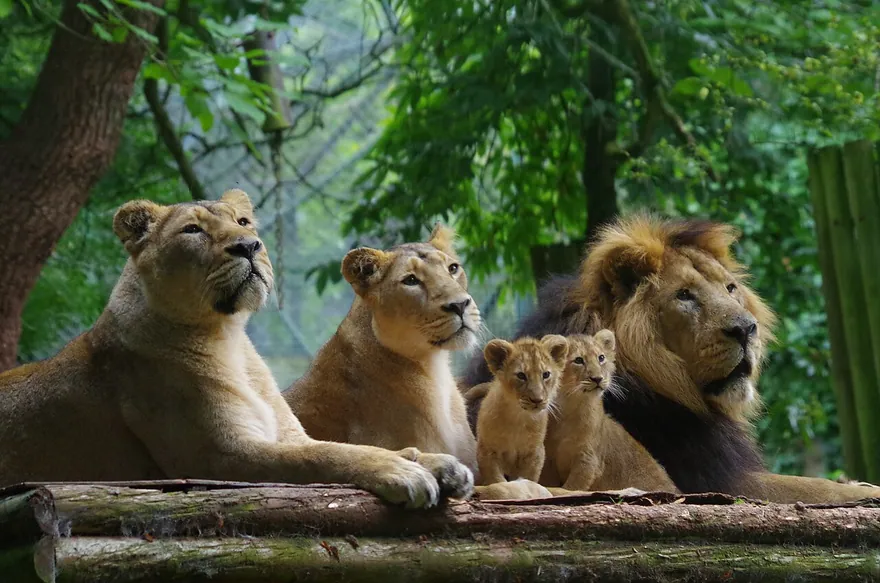
Photo: GinaFranchi · CC BY-SA 4.0
The lion is a big cat that roams the grasslands of Africa and the forests of India. Known for its powerful build and striking mane, the lion is a symbol of strength and courage in the wild.
- Male lions have a thick mane around their head and neck.
- Lions have a dark tuft of hair at the end of their tail.
- Adult male lions are larger than females.
Classification and size
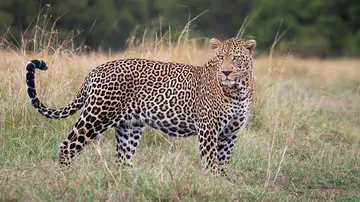
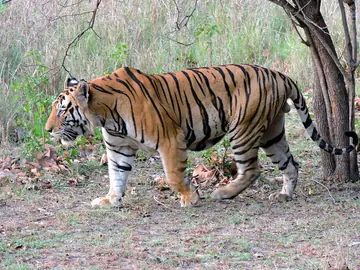
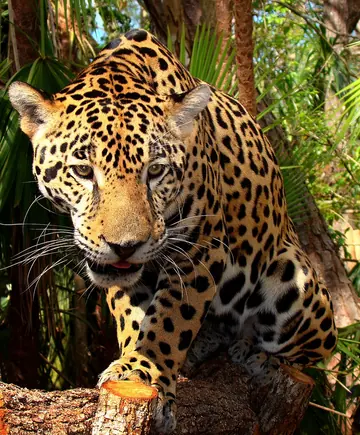
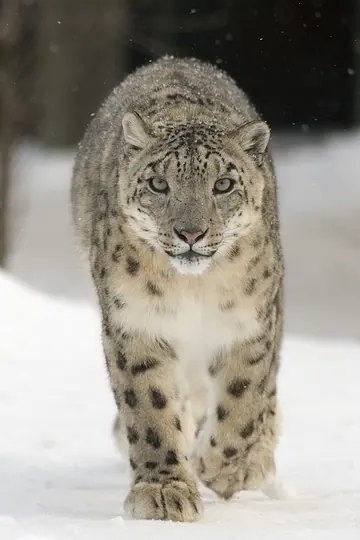
The lion (Panthera leo) is a member of the cat family Felidae. It shares the genus Panthera with the tiger, leopard, jaguar and snow leopard. Adult males are usually heavier than females and often carry a mane around the head and shoulders. The mane can vary in colour and fullness, so its appearance differs from one animal to another. Both sexes have a tuft at the end of the tail, which is a useful feature to look for in a photograph. The Smithsonian reports a weight range of about 150 to 250 kilograms for adult males and 120 to 179 kilograms for females.
Habitat and distribution
Wild lions live mainly in sub-Saharan Africa, with a separate population in western India. Grasslands and open savannas are familiar lion habitat, but lions also use scrub and open woodland. India’s lions live in and around the Gir landscape in Gujarat. A map of current populations would show patches of occupied habitat across Africa and a much smaller area in India.
Diet and pride life
Lions are carnivores. African prides take large hoofed animals, including wildebeest, zebra and antelope, where those prey are available. Group hunting can help lions bring down prey that is harder for one cat to catch. A pride typically includes related females and their young, with one or more adult males. Females often remain in the pride they were born into, while young males usually leave and may travel together before holding a territory of their own.
Conservation
The IUCN lists the lion as Vulnerable globally. Habitat conversion can leave prides in isolated areas, while declining prey and conflict over livestock add pressure. Protecting habitat therefore means keeping enough space for both the cats and the animals they hunt. The worldwide category combines populations with different local histories and trends.
Sources
At a glance
- Classification
- Mammal
- Scientific name
- Panthera leo
- Habitat
- Grassland, Savanna, Forest
- Regions in this directory
- Africa, Asia
- Diet
- carnivore
- Relative size
- large
- IUCN Red List
- Vulnerable (VU)