Polar bear
Ursus maritimus
 Vulnerable
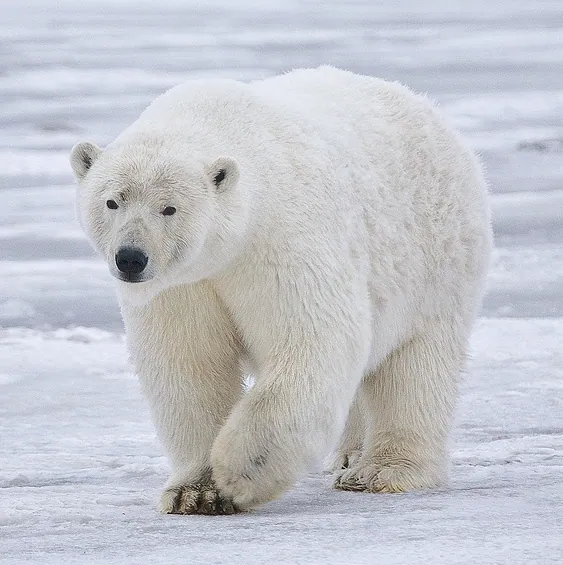
Photo: Alan Wilson · CC BY-SA 3.0
The polar bear is a mighty Arctic predator, built for life on ice and snow. These white-furred giants are the largest bears on Earth, with males sometimes weighing as much as a small car. Their black skin and thick fat layer keep them warm in freezing temperatures.
- Males can reach 800 kg (1,760 lb) — heavier than 10 average refrigerators.
- Their large paws work like snowshoes, spreading their weight on thin ice.
- Sharp teeth are perfect for slicing through seal blubber and meat.
Classification and size
The polar bear (Ursus maritimus) is a mammal in the bear family Ursidae. A long neck and relatively narrow head give it a different profile from a brown bear. The United States Fish and Wildlife Service describes adult males as generally larger and heavier than females. The coat traps insulating air, and layers of fat help conserve heat and store energy. Broad paws distribute weight on ice and give the bear a large surface to push against the water when swimming.
Habitat and distribution
Polar bears live across the Arctic, including waters off Alaska, Canada, Greenland, Norway and Russia. Much of their hunting happens on sea ice, especially over shallow waters where seals are available. The ice changes through the year, and bears move as it forms, drifts and breaks up. In places with seasonal ice, bears may spend part of the year ashore. Pregnant females also use maternity dens, often in snow on land.
Diet and hunting
Polar bears depend heavily on seals, particularly ringed seals and bearded seals. A bear can wait beside a breathing hole for a seal to surface or approach one resting on the ice. Seal fat provides much of the energy a bear can store for a period when food is harder to find. How long the bear can hunt each season depends on when ice becomes available in its part of the Arctic.
Conservation
The IUCN lists the polar bear as Vulnerable globally. Loss of sea ice can shorten access to hunting habitat and lengthen the time bears must spend ashore or swimming between ice. Local conditions differ across the Arctic, so monitoring looks at separate populations. The U.S. Endangered Species Act lists the polar bear as Threatened, a designation under a different system from the global IUCN Red List.
Sources
At a glance
- Classification
- Mammal
- Scientific name
- Ursus maritimus
- Habitat
- Polar
- Regions in this directory
- Arctic
- Diet
- carnivore
- Relative size
- giant
- IUCN Red List
- Vulnerable (VU)